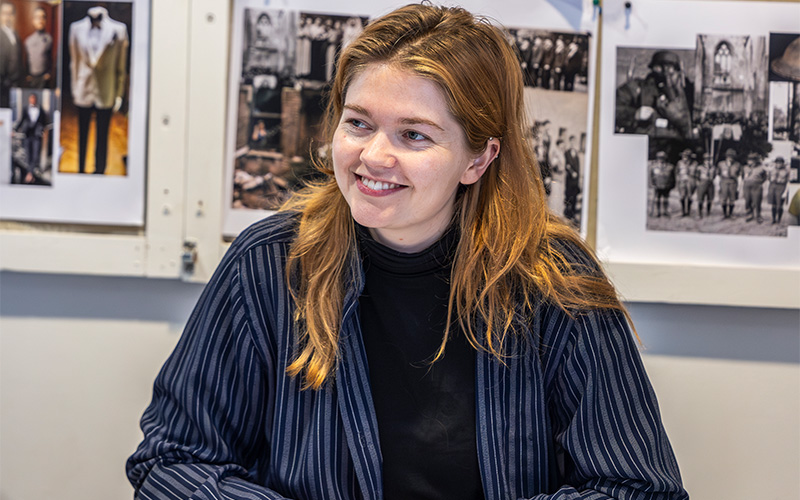
Assistant Director Rosie Tricks shares her favourite moments from the Twelfth Night rehearsal process
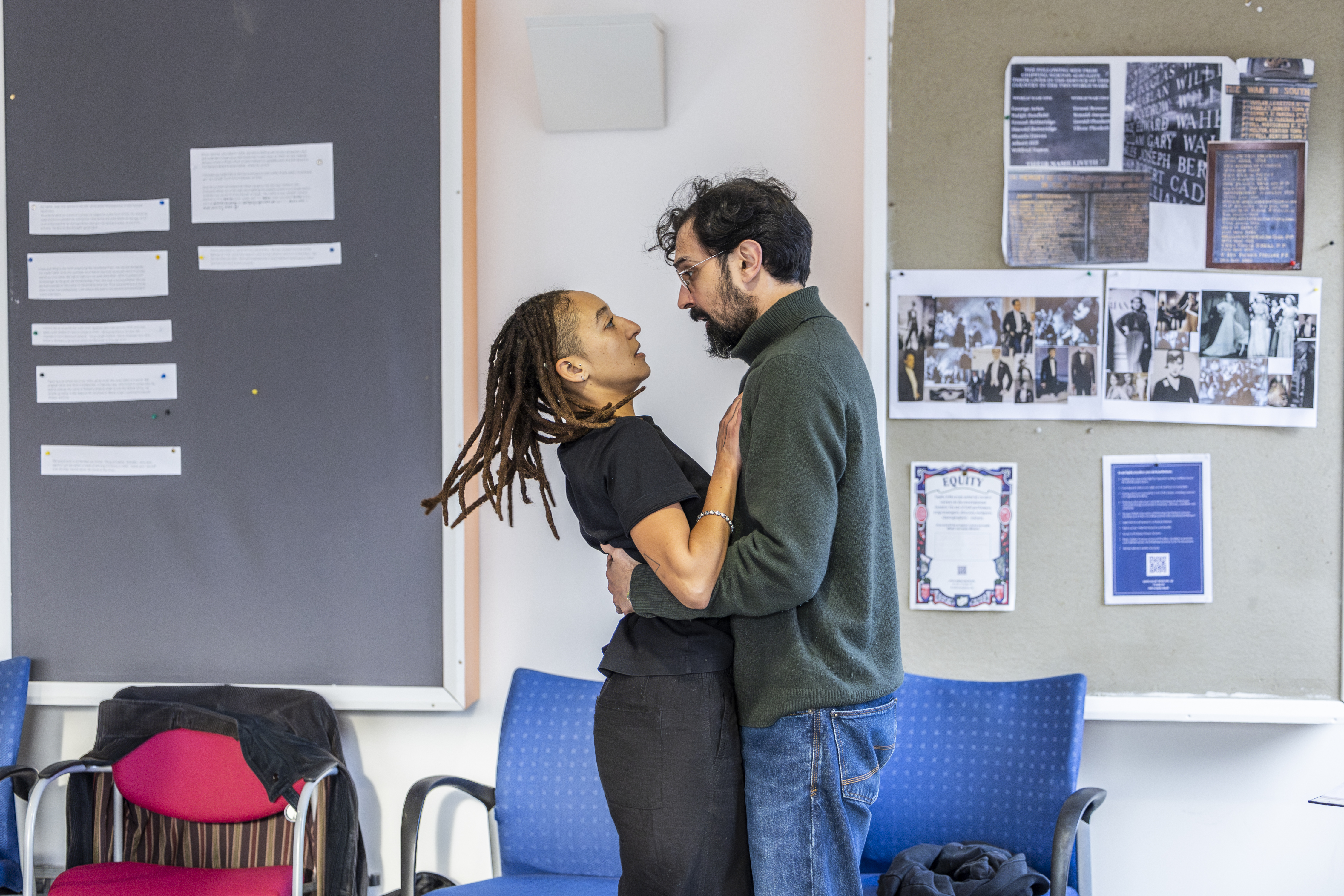
For four weeks we have been rehearsing Twelfth Night in one of the OT’s on-site rehearsal rooms, supported by the kind of snack station I spent years trying to inspire my mum into developing. Rehearsals aren’t all about the tea breaks (apparently) but running lines is definitely made easier with a steady supply of motivational biscuits.
We have now moved into the theatre for technical rehearsals before our first preview on Saturday. The show will change a lot over the next few days before press night, but for now we are ready for our first audience, and despite a little bit of sadness that our time in the rehearsal room is coming to an end, I’m excited. Here are a few parts of the process that have stuck with me.
Opening up the story
On the first day, our ten-person cast, the creative team, and every single person we could find in the Orange Tree building gathered together for a read through of the play. We went around the room, and everyone talked about their first experience of Twelfth Night, with lots of people having read it at school, seen it on stage or screen, some having performed in it, and a couple of people coming to it for the first time. It’s an interesting balance performing a play like this because you have both its history and its ‘firsts’ – the first time someone has seen it, or the first time an actor has taken on a specific role.
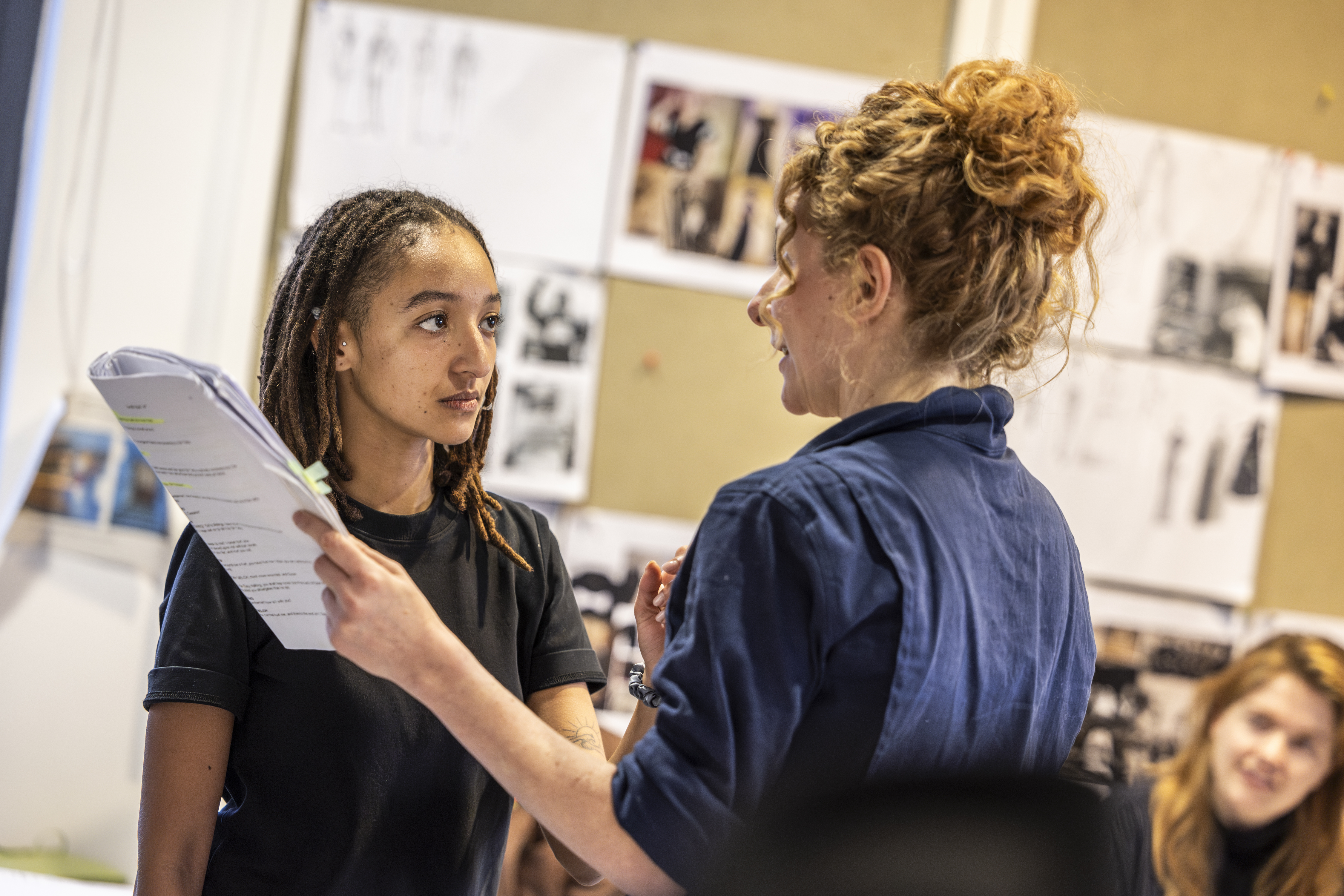
We started work on each scene by reading it aloud and then reading it again but ‘translating’ it into contemporary speech, so that ‘Sir Toby and the lighter people’ became ‘Sir Toby and his…lightweight entourage’. Doing this helped get us on the same page so that we had a shared understanding of what was happening, but it also started to crack open our differing interpretations, and the many directions we could take.
We then looked in more detail at the characters and particularly at what they might be saying in the context of 1945, when our production is set. How does the moment where Sir Toby Belch turns on Sir Andrew and berates him change if Toby served in the war, but Andrew did not?
Space and storytelling
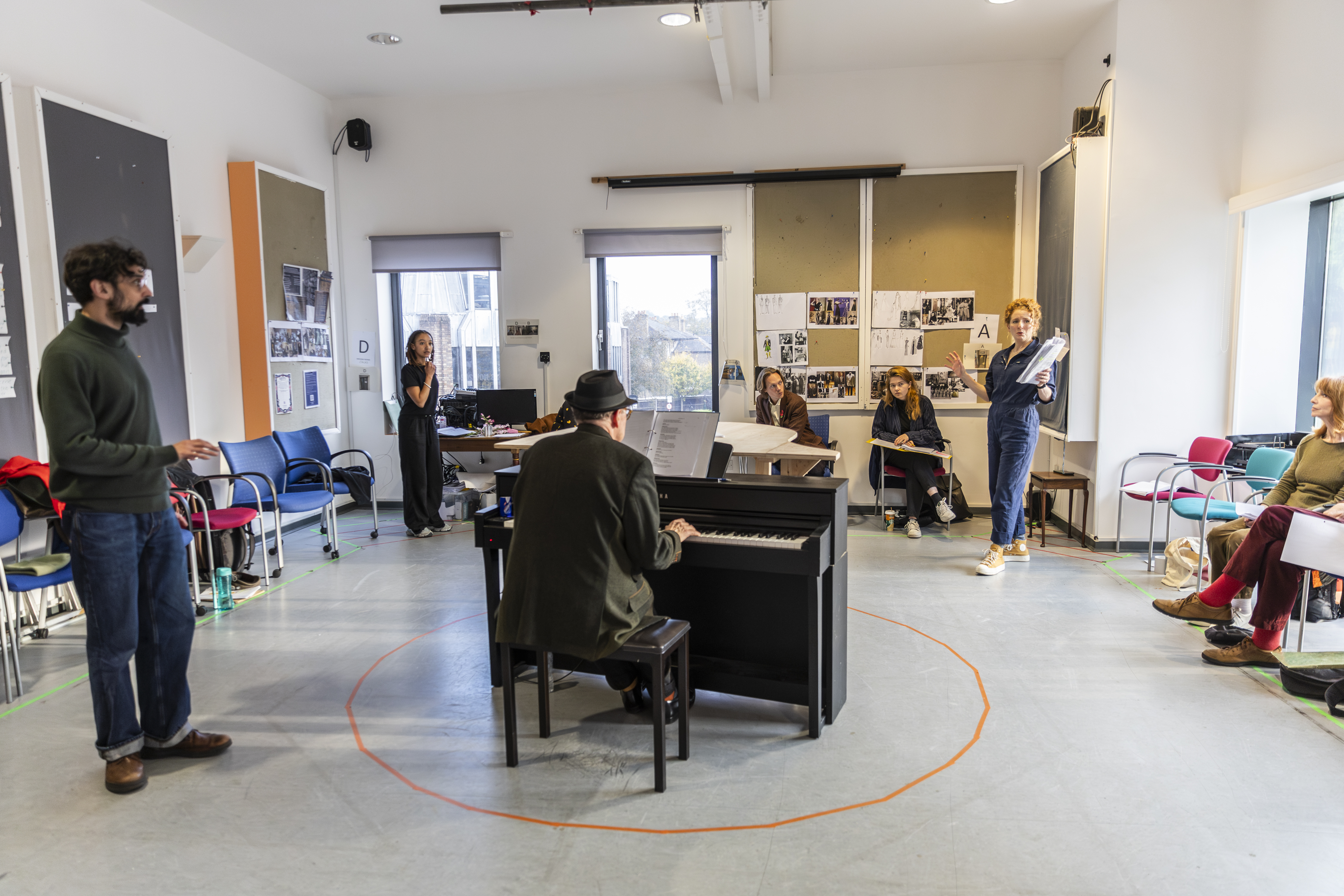
The earliest conversations I joined in the preparation stage were with Tom (Director), and Stefan Bednarczyk, (Composer and also playing Feste). The piano that Stefan plays during the show is a central part of the set, and we have had its shape marked out on the floor in rehearsal, as well as an electric keyboard with a wooden extension to demonstrate its size. It’s been important to have that physically in the room from the beginning, as initially we had to adapt to actors’ paths being tracked around the piano, or scenes between lovers happening with the piano between them.
In reading about previous productions, I came across a description of Orson Welles’ Twelfth Night in 1932, which had a huge storybook as the set propped up behind the actors, so they would turn the page to set the background for the scene. As our play has shifted around the piano in the centre, I’ve seen the story first adapt to its new space, then start to be made new by it, so that the piano and the way the actors move around it starts to create meaning. The piano has become a hiding place, a place to rest, a prison, or the thing standing in the way of the characters’ desire to touch one another.
As a side note on space, remembering which of the four main entrances and exits the actors come in and out of has been a study in itself. Our tactic for a while was for the actor to finish their line, and either shout themselves or be (supportively) yelled at from the sidelines ‘Exit A!’. Might need to cut those for the actual show…
Guns and dancing
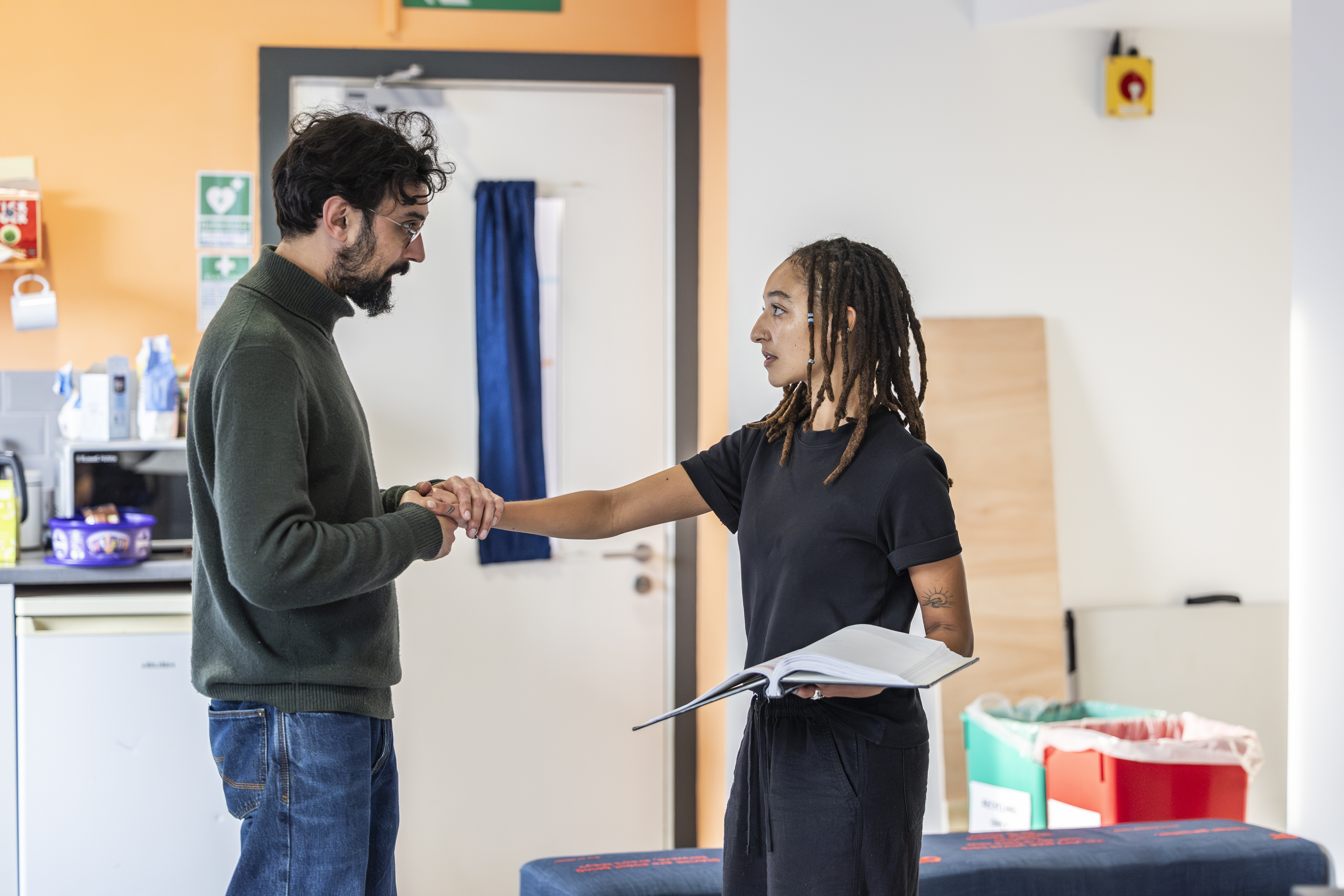
Week Three was also when we started to get serious – serious fighting, serious dancing. Fight director Philip d’Orleans came to work with the moments where physical altercations happen, and to talk us through the duel.
It’s so interesting how conversations that can feel very practical – ‘I grab your hand here, and then I go to hit you there’ – can spark new insight into a character. Sir Andrew has avoided anything military, and therefore doesn’t fight with any confidence, whereas Sir Toby is experienced, and has the muscle memory of conflict even though he is often addled by booze. Viola and Sebastian have a social confidence that their upbringing has given them to take on the situations that come their way. Plotting the fights shift between technical step-by-step testing, and deeper discussions of character, so that we hopefully learn more about a character by how they act in moments of danger.
Movement director Julia Cave came to develop the dancing in the play, as well as the opening and the ending sections of the show. One of the things that is both brilliant and disconcerting about Twelfth Night is the lack of resolution for characters like Malvolio and Antonio, and the mood that leaves us with at the end. The ending sequence gave us the chance to think about how to express that, capturing the sense of joy and also of poignancy that we’ve been looking to thread throughout the show.
Now it’s just practice, practice, practice, and roll on Saturday night…
Rehearsal images by Ellie Kurttz.