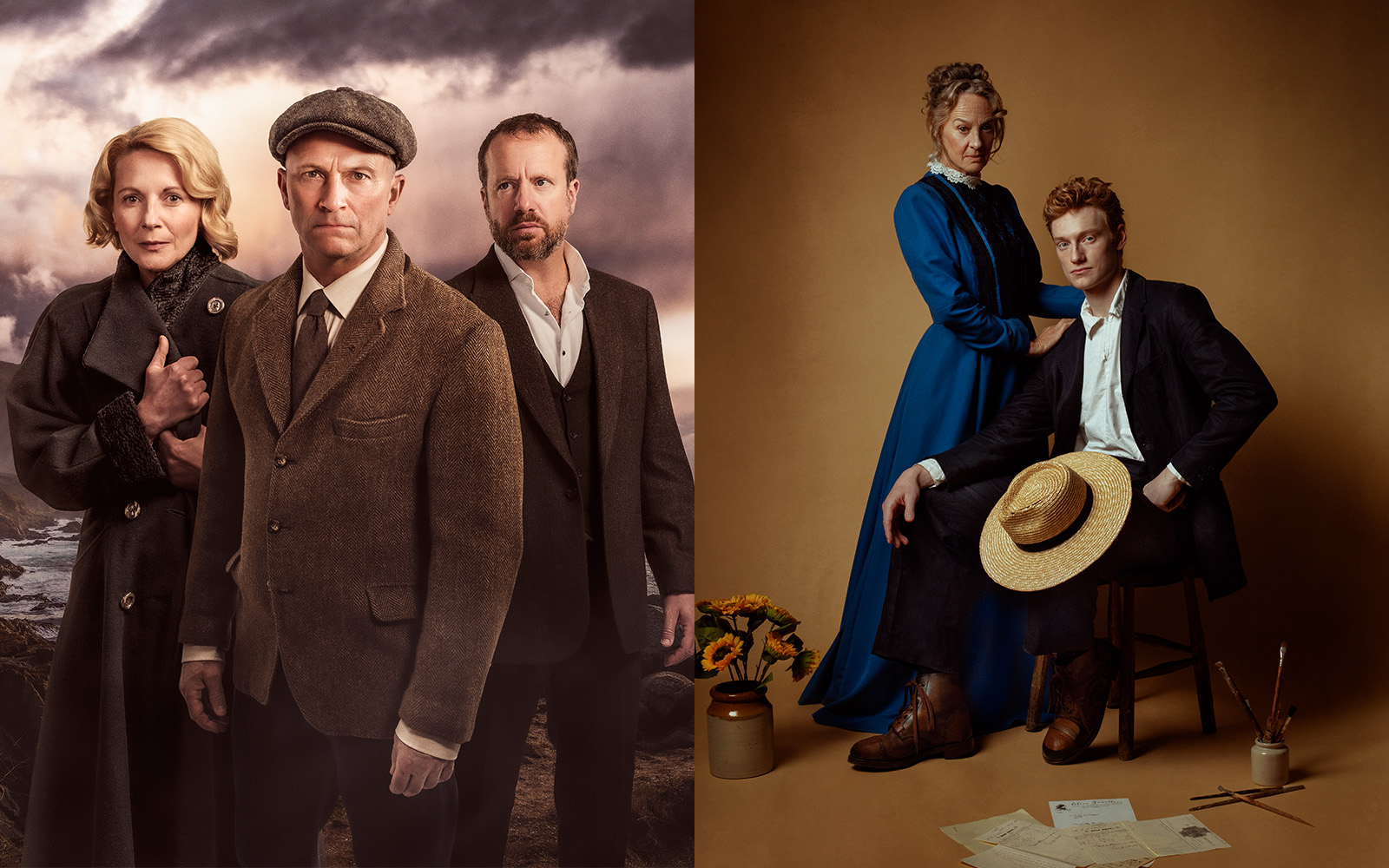
In Twelfth Night, Jane Asher plays Maria, Lady Olivia’s mischievous lady-in-waiting, and Clive Francis plays Sir Toby Belch, her often-intoxicated partner in crime. 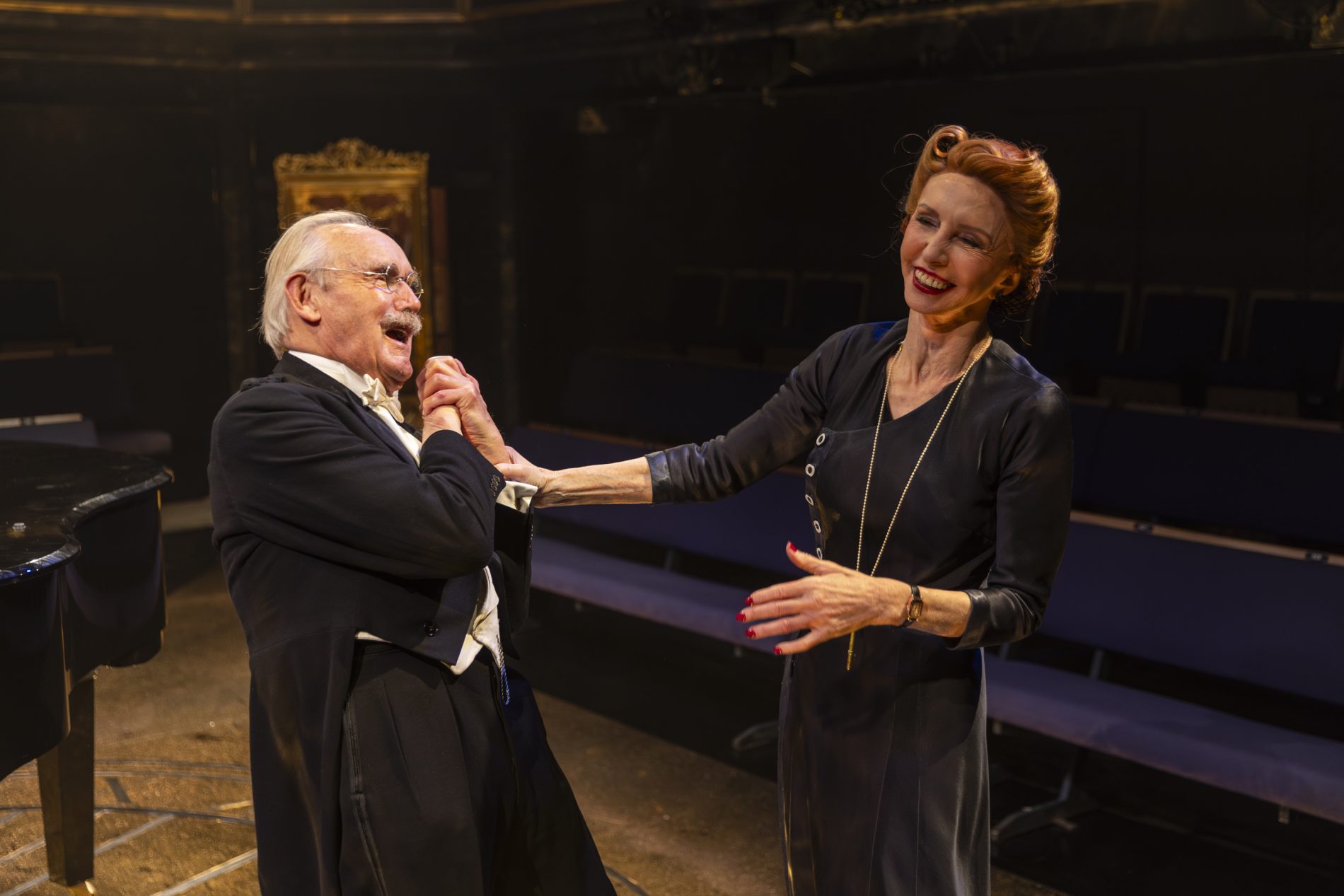
Spoiler alert: The two marry by the end of the play. It’s the fourth time Jane and Clive have played husband and wife onstage, having previously partnered in THE RELUCTANT DEBUTANTE (2011), THE GATHERED LEAVES (2015) and THE CIRCLE (2023).
OT Marketing Officer Anna Hampton sat down with them to discuss love, onstage and off, and the special pleasure of working with a close friend.
Anna Hampton (AH) – So, your first play together was The Reluctant Debutante [by William Douglas Home].
Clive Francis (CF) – In which we played husband and wife.
I’d never met Jane before, and our first meeting was at a photo shoot for the poster of the programme in some strange little studio somewhere near the Old Vic. I shook hands with Jane one minute and was cuddling up to her the next!
Jane Asher (JA) – Meeting people for the first time is interesting in showbiz. I always think that’s why there’s the old cliché of us calling each other ‘darling.’ Because you often have to work in a sort of immediate intimacy, get to know each other fast – and then possibly never work together again – it forces an instant relationship, and also means remembering names can be extremely tricky! ‘Darling’ can cover it!
I imagine, you know, if you start a new job in a solicitors’ firm, for example, you don’t suddenly call everyone ‘darling’ and then leave a few weeks later…
AH- And what was the relationship between your characters in The Reluctant Debutante?
CF- The play took place during the 50s, when, if you were of a certain class, your daughter would be presented to the Queen. As a couple we were very insistent our daughter should be, but she wasn’t — hence The Reluctant Debutante.
AH- It does tell you all of it in the title, doesn’t it?
CF- It was a very funny play. It’s slightly unfortunate that the overall storyline is now dated as it had some fantastic, witty dialogue.
JA- Yeah, wonderful dialogue. Great fun.
AH – And that was a tour, so you played together for a long time. Did you think that you would ever reunite on stage?
CF- No.
JA- No, not necessarily – you just never know in our jobs.
CF- But then we did The Gathered Leaves [by Andrew Keatley] at the lovely Park Theatre in Finsbury.
JA- And in that, well Clive played a rather difficult character, didn’t you, as the husband?
CF- I was on the verge of dementia. The play centred around my 70th birthday party. Thinking about it, I was a little too young to play it then, and I’m too old to play it now.
JA- Never, never darling, you could play 50.
CF- It was a terrific play, actually. It should have had a life in the West End, but there were too many characters, and the author was determined not to cut any of them.
JA- It’s a shame because it was very successful. And they were lovely parts to play.
CF- They really were fabulous parts. Jane and I were not only married, but Jane’s daughter [Katie Scarfe] was in it as well, which was lovely.
JA- And Alex Hanson’s son [Tom Hanson] was in it, so there were two actors with their offspring, which was rather fun.
CF- Yes.
JA- And it was a great part for me because she was mostly very calm and steady but would every now and then explode with fury at him when he was being truly unpleasant.
It was a very interesting play, with lots of humour in it as many good plays contain, however tough they are, but not an out and out comedy.
CF- So that was our second marriage.
AH- And then the third one was The Circle [by Somerset Maugham, directed by Tom Littler at the Orange Tree], which was not too long ago.
JA- No, indeed.
CF- Except in the case of this play we were divorced.
JA- Yes.
AH- Each marriage is more complicated than the last.
JA- That’s true, that’s true, that’s an interesting one. In the first one we were very happy, rich posh people – you know, daughter coming out and all that. In the second one, he was getting very difficult, and in the third one we were already split.
CF- And there was no way we’d ever get back together again.
JA- No.
CF- But we did love each other’s company. There was sort of a frisson between us.
JA- There were kind of hints that we might have – something. Because my current husband was being equally difficult.
CF- And now this has gone full circle, because in Twelfth Night we aren’t married at the start but are by the end.
JA- Yeah, kind of starting all over again really.
CF- She’s gone from marrying the guy who’s suffering from dementia to a drunk!